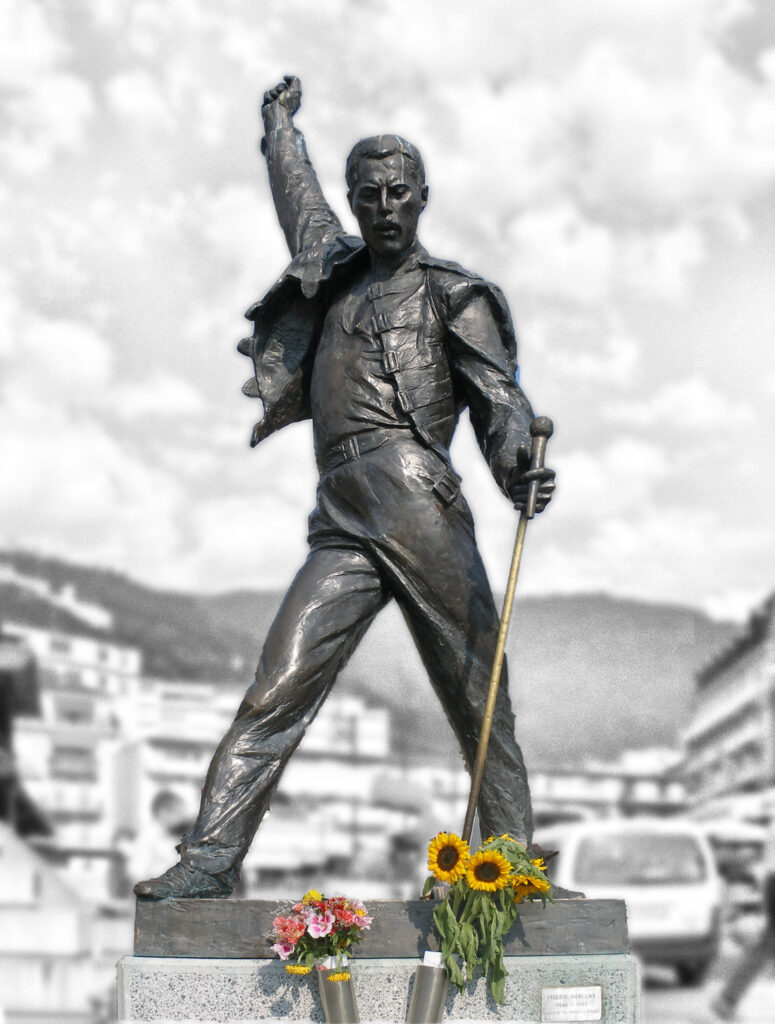
Acquired Immunodeficiency Syndrome, also known as AIDS. On November 24, 1991, he died. May he live forever.
Bohemian Rhapsody. Just sing it already, from the top of your lungs:
“I see a little silhouetto of a man
Scaramouche, Scaramouche, will you do the Fandango?
Thunderbolt and lightning, very, very frightening me
(Galileo) Galileo, (Galileo) Galileo, Galileo Figaro, magnifico…”
Crazy little thing called love
Drugs! Strange thing this, but Freddie’s own Wikipedia page is remarkably clean. You will find precious little about his drug-fueled lifestyle, his nights in Berlin and New York’s gay scene, or any other detail concerning the more raucous side of his existence. But yes, Freddie used many, many drugs.
Eccentric. Freddie Mercury was eccentric in the best possible way: flamboyant on stage, unpredictable in his artistic choices, delighting in costumes, characters, and theatrical excess. Yet his eccentricity was never empty—it came from a restless creative mind that refused to be ordinary for even a minute.
Farrokh Bulsara. His birth name. Born on September 5, 1946, in Stone Town, Zanzibar, to Bomi and Jer Bulsara, he was raised in a Parsi-Indian family with a strong sense of culture and education. Farrokh spent much of his childhood in India, attending St. Peter’s School, where he began to cultivate his artistic talents. In 1964, due to political upheaval in Zanzibar, he and his family moved to England. Settling in London, he eventually enrolled in art college, immersing himself in the local music scene. In 1970 he met Brian May and Roger Taylor, laying the foundations of what would become Queen.
Gay, bisexual, hetero, straight, bent… Who cares, man? I don’t, and Freddie himself certainly didn’t. Over his life he had relationships with several men, yet he also maintained a deep, lifelong friendship with Mary Austin, who remained one of the most important people in his life and whom he often called his ‘common-law wife’.
Hits. “Killer Queen”, “Don’t Stop Me Now”, “Somebody to Love”, “Radio Ga Ga”, “Another One Bites the Dust”, “Under Pressure”, “I Want It All”, “Innuendo”, “I Want To Break Free”, “The Show Must Go On”… And so does this list.
I didn’t know where else to put them: the greatest stadium anthems ever written!
Joy! Utter and utter joy! Is what his music brought me… And millions of others on the planet! Thanks, Freddie. I love you, man.
Killer Queen
Live Aid was a massive benefit concert held on July 13, 1985, organized by Bob Geldof and Midge Ure to raise money for the famine in Ethiopia. It took place simultaneously in London’s Wembley Stadium and Philadelphia’s JFK Stadium, featuring dozens of the world’s biggest artists. The event aimed to draw global attention to the crisis while raising funds, ultimately becoming one of the largest live broadcasts in history, watched by nearly 2 billion people. Queen performed there for about twenty minutes, playing some of their biggest hits. Those twenty minutes are widely regarded as one of the greatest rock performances ever. Check it out for yourself:
Movie. They made this movie about him, starring Rami Malek and directed by Bryan Singer.
Night at the Opera. Their 1975 masterpiece — the album that firmly established Queen as one of the most innovative and ambitious rock bands of their time. Also:
Opera! Freddie Mercury’s venture into actual opera culminated in his collaboration with the legendary Spanish soprano Montserrat Caballé, a singer he deeply admired. In 1987–1988, the two recorded Barcelona, an album that blended Freddie’s rock sensibilities with Caballé’s classical power, creating a rare crossover project that was ambitious even by his standards. The title track became especially iconic.
Performer. Freddie Mercury was one of the greatest live performers ever. On stage, he was a theatrical force of nature: flamboyant, commanding, and larger than life, prowling stadiums with sweeping gestures, dramatic poses, and a voice that could soar over tens of thousands of fans. He turned every concert into a performance, using his microphone stand like a prop, teasing and engaging the crowd with a mix of showmanship and charisma.
Off stage, however, he was far more private and reserved. Away from the lights and cameras, Mercury could be introspective, calm, and even shy, carefully managing his personal life and relationships while maintaining the mythic persona that fans adored. The contrast between the explosive performer and the private man highlights just how deliberate and controlled his stagecraft truly was.
Q… Hm… let me think now… What word goes with Q…? Queer! Yes, of course… Or, quintessential! Nice one… Or quirky, maybe…
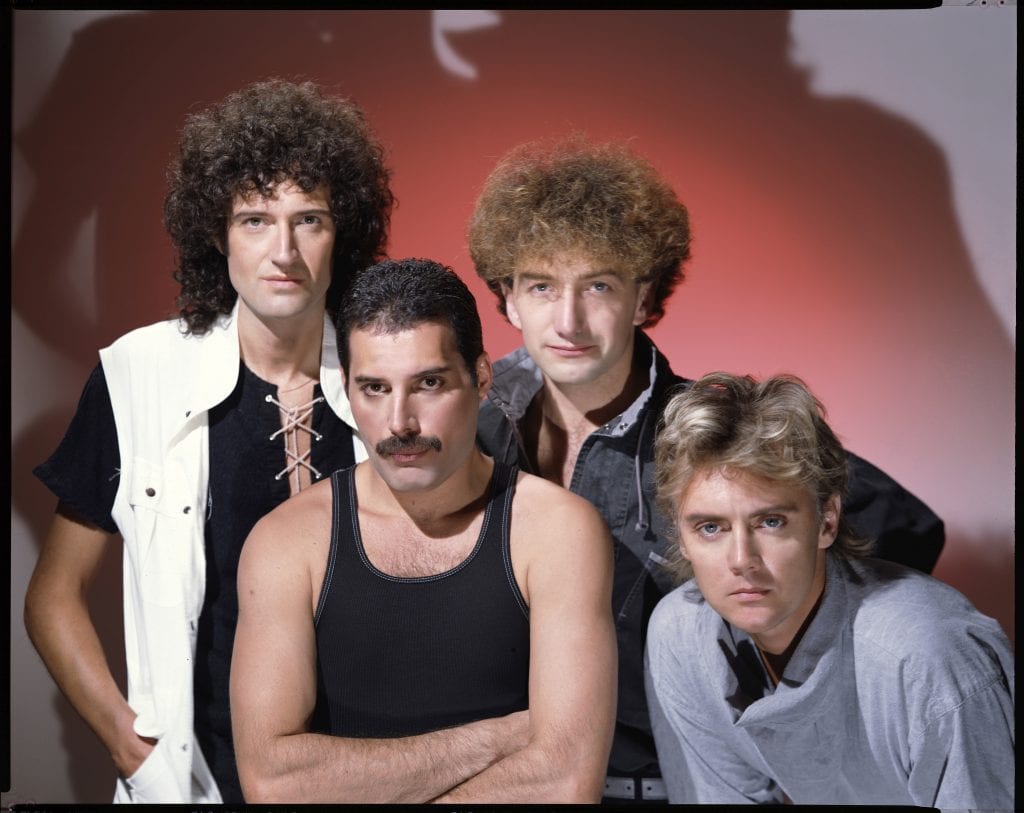
Roger Taylor, John Deacon, Brian May… The band! They first came together in London’s music scene at the end of the 1960s. Brian May and Roger Taylor were already playing together in a band called Smile when they met Farrokh Bulsara, a fan who frequently attended their shows and kept insisting he should be their singer. When Smile’s original vocalist left in 1970, Bulsara stepped in, renamed himself Freddie Mercury, and rebranded the band as Queen. Soon after, bassist John Deacon joined in 1971.
Studio albums.
Queen (1973)
- Queen II (1974)
- Sheer Heart Attack (1974)
- A Night at the Opera (1975)
- A Day at the Races (1976)
- News of the World (1977)
- Jazz (1978)
- The Game (1980)
- Flash Gordon (1980)
- Hot Space (1982)
- The Works (1984)
- A Kind of Magic (1986)
- The Miracle (1989)
- Innuendo (1991)
- Made in Heaven (1995)
Teeth!
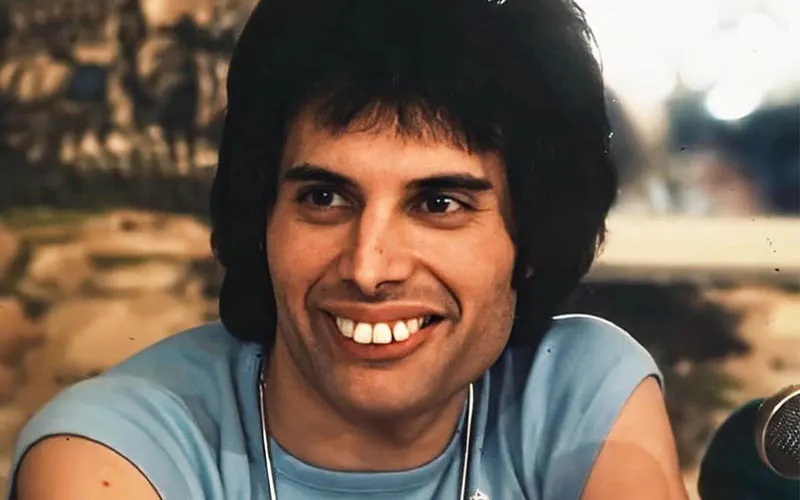
He actually had too many. Too many teeth! No, really, check this. Teeth!
Under Pressure. What else?
Voice. Freddie Mercury possessed a voice of astonishing range and versatility, spanning nearly four octaves from deep baritone lows to piercing tenor highs. His technique combined classical training, instinctive control, and an unparalleled sense of drama, allowing him to move seamlessly through rock, pop, opera, jazz, and balladry. The expressiveness of his voice became a defining instrument of Queen’s sound, and a key part of Mercury’s identity as one of the greatest vocalists in rock history.
Wembley Stadium, 1986. As one of the closing concerts for their The Magic Tour, Queen performed for 80,000 people in what many consider not only one of their greatest shows but also one of the best rock concerts ever. Find it here:
Xtremely annoying, this letter…
Yellow Jacket. The infamous jacket worn by Freddie during his 1986 Wembley Stadium performance. It sold at a Bonham’s auction in 2004 for 49,000 dollars.
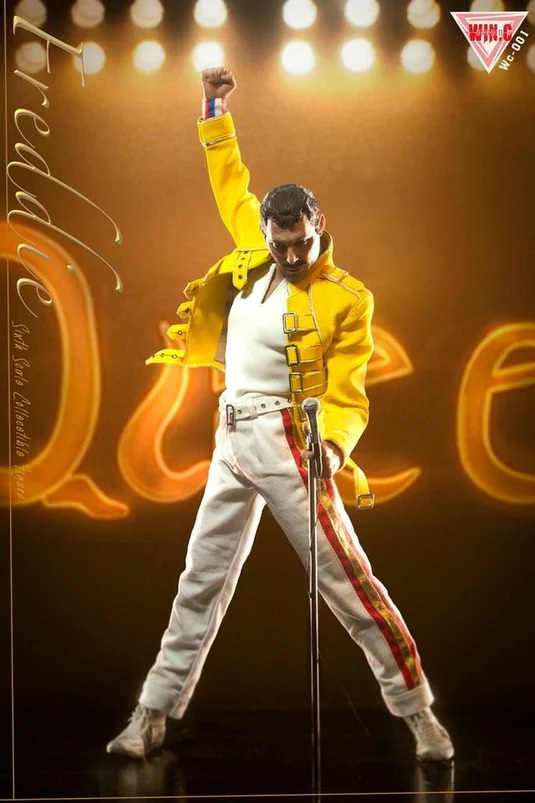
Zenith. Final. Highest. Best. Ever.
Leave a Reply