I’m not sure why I’m such a fan of the sixties, but I am. Maybe it’s because I’ve lived a past life there that keeps haunting some subconscious part of my current being. Or maybe it’s because I’m an addict and they partied a LOT back then. Whatever the cause may be, I can’t get enough of books and movies from and about that period. Tim Leary‘s ‘The Psychedelic Experience‘ and ‘Turn on Tune in Drop Out‘, Hunter S. Thompson‘s ‘Fear and Loathing in Las Vegas‘ and ‘Hells Angels‘, Aldous Huxley‘s ‘Doors of Perception‘—I’ve read them all. Or absorbed them all, maybe a better word. Inhaled them. With a puff of smoke, maybe…
Every one of those people (among many others, of course) can be considered catalysts of that whole sixties ‘movement,’ so to speak. What did they try to move, you ask? Propel forward? Well, the consciousness from society as a whole, I guess. If the fifties can be categorized as cramped, stuffed with suffocating morals and superficial niceness, the sixties were society hitting puberty: breaking free from all that, poking an unwashed middle finger into the twitching eye of the previous decade, and rushing headlong into a party that’s going to stretch well past midnight. So, don’t wait up, Mommy and Daddy… Erupting, like an overripe pimple, if you will, throughout what one would call ‘Western’ society, into an explosion of books, music, movies, and, as mentioned earlier, lots and lots of drugs… The ‘counterculture’ was born. Hippies! Flower Power! Peace & make Love, not War! Rebels with a bong… The Sixties, man!
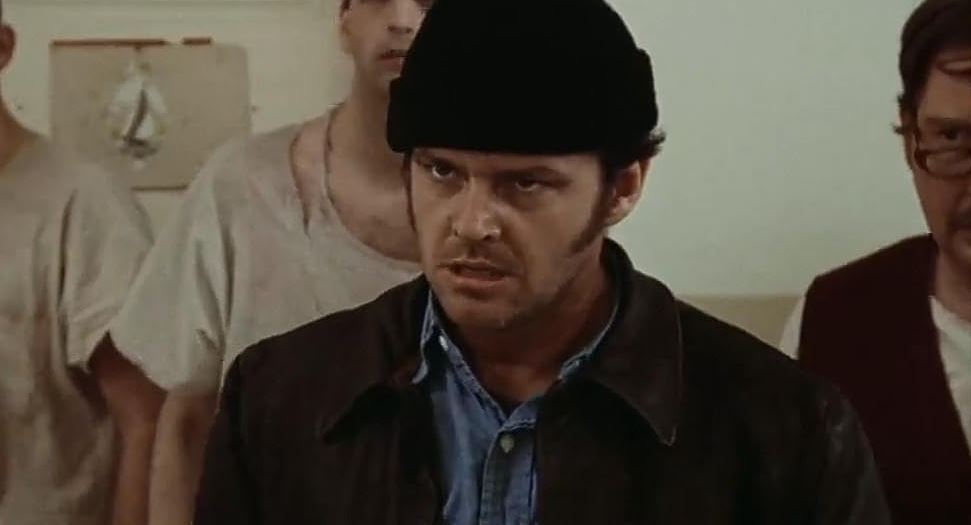
So, Kesey & The Cuckoo’s. It’s not a band, no. It refers to Ken Kesey, an American author (1935–2001), and his famous novel, One Flew Over the Cuckoo’s Nest, published in 1962. For those three people out there that don’t know it, it’s about Randall McMurphy, a happy & grinning rebel of his own kind. In an attempt to dodge jail time, he fakes insanity and gets sent to a psychiatric hospital, to a ward run by the brilliantly named Nurse Ratched. Once there, he keeps upsetting the order, keeps challenging the system, and in the end, they lobotomize him. (Gloriously movified, of course, by Jack Nicholson in 1975.) Moral of the story: ‘I need to break free from this suffocating system before it kills me.‘
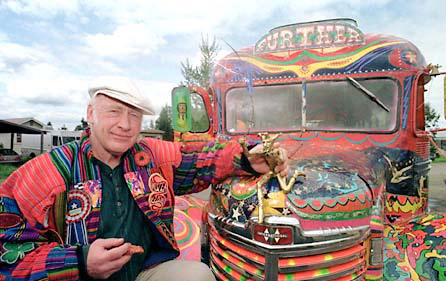
Kesey wrote his book while working the graveyard shift at a mental hospital in Menlo Park, California. At the same time, he took part in the CIA’s infamous MKUltra project, an illegal human experimentation program, to develop procedures and identify drugs that could be used in altering human behavior. Among the substances that he and other test subjects were administered were LSD, mescaline, and psilocybin. After his experiences with LSD especially, Kesey decided that the whole world should know about this stuff. He got hold of some of it outside the CIA experiments and started using it recreationally. He introduced it to some students from Stanford, and after his novel became a major success, he moved to La Honda, California, where he started hosting ‘happenings’ together with his Merry Pranksters. His ranch there became a focal point of the whole sixties counterculture: Hunter S. Thompson’s Hells Angels came to visit, as did the Grateful Dead and poets like Alan Ginsberg. And all of them used LSD. Chronicled brilliantly by Tom Wolfe (1930 – 2018), a Thompson-style Gonzo journalist who traveled with Kesey and his Pranksters, in his book, ‘The Electric Kool-Aid Acid Test.’ Moral of the story: ‘instead of breaking free from the system I can just transcend it.’
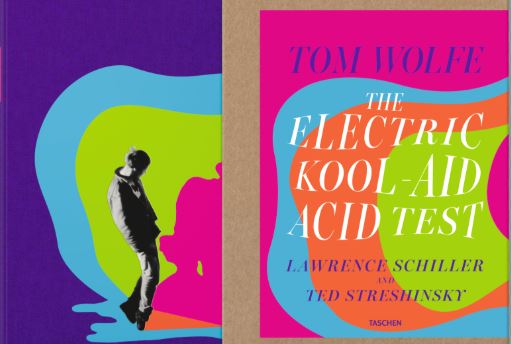
What’s interesting to me about all this (apart from… well, just about everything) is the development of Kesey himself as a human being. If you compare both ‘Cuckoo’s Nest‘ and ‘Acid Test‘ (damn those long titles), you’ll see something intriguing: in the first book, ‘pre-LSD,’ if you will, Kesey, still a ‘good’ student with a job, tells about how the anonymous machinery of ‘the system’ could grind you up and destroy you if you don’t play by the rules. McMurphy vs. The System: System wins. Then comes LSD, and everything changes. In the second book we learn how Kesey, after his mind-expanding experiences, gains the insight that ‘the system,’ instead of being escaped from, can just be transcended. And then played with, which is exactly what he and his Pranksters will do. He quits his job, moves to La Honda, and starts handing out LSD by the bucketloads to anyone and everyone. For free. Because becoming enlightened oneself is only the first step, you see. After YOU’ve seen the light, you want the rest of the world to see it as well!
Yeah… Sadly, though, we all know the outcome of this particular fairy tale: with the turning of the decade, it fizzled out like a firecracker left in the rain. Seen from the view of ‘the system’ itself, it was little more than a brief flare-up of emotions, after which business could return to usual. After the bleak hangover that’s generally referred to as ‘the seventies,’ once the eighties came around, we were all back to full-on consumerism, coke-snorting our way through the rainforests and polar ice caps. Fast forward forty years, and here we are, Netflixing and Instagramming our way through the dying remains of what was once a happy little planet.
Kesey, along with all the other icons of the era, saw a better world, and they tried their hardest to make it happen. That they eventually failed is less important, I think, than the fact that they at least tried. Compared to today’s world, in which superficiality, general dumbness, and rampant racism seem to be the driving forces, that makes them heroes to me. Maybe that’s why I love the sixties.

Leave a Reply