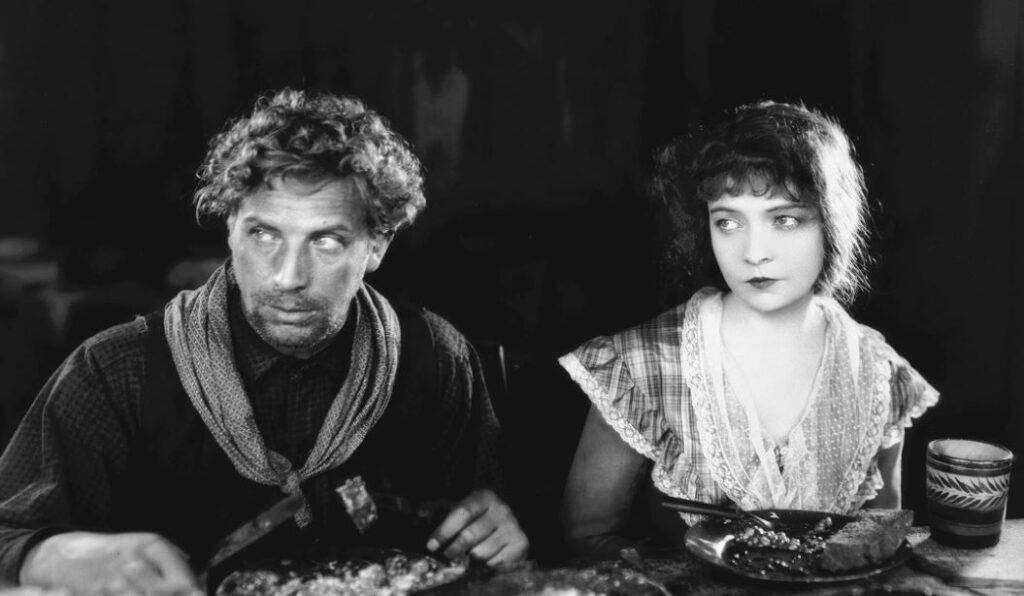
That there’s a lot of wind in The Wind is a given. That there’s not a whole lot else, well, that’s a bit harder to take. I was promised a masterpiece of the silent era and received a load of hooey in return. An hour-and-a-half that crawled along at a pace that set new standards for glacial, this alleged classic pushed my tolerance to unholy levels, and that’s just in the first five minutes. Maybe it was the piss poor print; understandable given the century that has passed since its release, but unforgivable when you’re trying to discern faces amidst the blowing dust. And then there’s Lillian Gish, a legend of the silent screen, giving it all she had in service to something that may have made sense in a story conference, but failed to translate at any level other than cheeky subtext. Which I’ll get to. I have no problem with someone saying there’s depth and wisdom afoot, even a little heavy-handed symbolism for the cheap seats, but I can’t allow for a serious defense. Whatever “is” there remains a stretch, though stretching is what I do best.
Gish is Letty, a wide-eyed nitwit from Virginia, heading out West for the usual reasons in the motion picture business, which is somewhere between starting over and finding a man. Oh, she’ll find one – maybe two – and in turn, each will ogle, grope, and assault her. Repeatedly. She’ll also face a jealous wife, an old coot, and finally, when she’s had enough, she’ll shoot one of the bastards dead. Which begins the exploration of subtext. We assume, I believe, that Letty is a virgin. Innocence personified. A woman in full amidst masculinity’s push. Her journey West is her sexual awakening. Instead of love, there is lust. Exploitation. The steadfast refusal to see her as anything other than a set of tits and a womb to match. And the wind? Passion, perhaps, or the never-ending thrusts and gyrations of male genitalia. It all makes sense, and I’d go there first if I was forced to care. But I don’t. So onward we go.
I mean, one of the men does offer Letty an apple, which is a 2×4 to the head in any context. She accepts, bites, and loses it all, just like every woman since creation. But is she a temptress? Not exactly, but by the standards of 1928, or whenever this story took place, she’s clearly the most attractive woman in the room. The previously mentioned jealous wife is the true test of all this, using whatever time she has on screen to send a healthy dose of stink eye in Letty’s general direction. That is, when she isn’t carving an animal with unmatched relish while cradling a massive knife like a precious newborn. Letty is a threat, and not just any threat, but the only kind that matters to another woman. She can and will steal your man, just give her time. Here we are, at the cusp of cinema’s transition to sound, and the oldest truth still holds: there’s no hate like the hate a woman has for her own kind. Roaring about the patriarchy is just a diversion. Give women any semblance of power, and they’d shoot the bitches first.
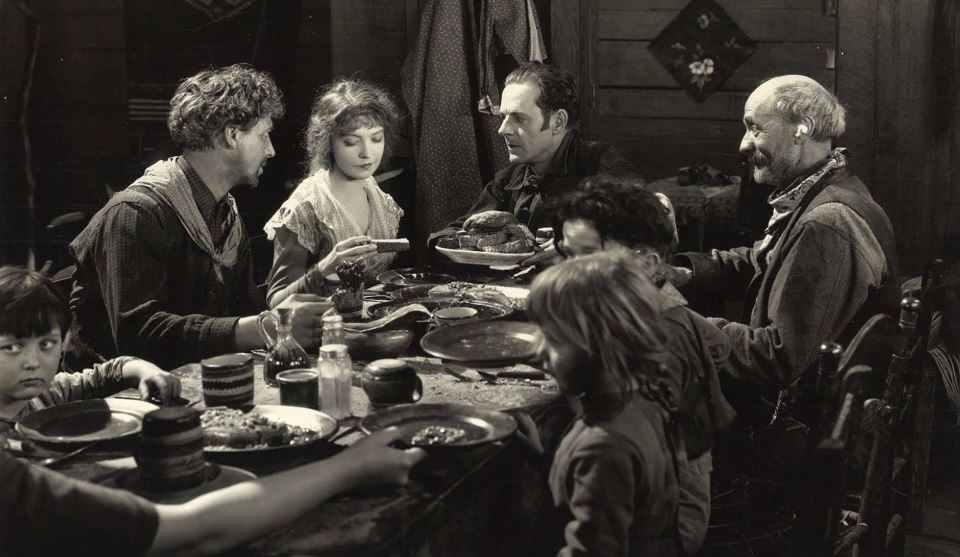
Before I go, I must mention what had to be the worst part of the entire experience: the soundtrack. I’ll allow that the movie I saw was not the one that played in theaters, and perhaps it was a massive joke played on an unsuspecting public by someone with nothing but time on his hands. Butcher the classics, have a little fun. Still, this wasn’t a copy I found on YouTube. It was right there on Amazon Prime, which one assumes has the “official” version in place. But instead of the usual orchestral pounding, full of sweeping emotional manipulation, what I heard was, with no exaggeration, what I’ve never heard before. It wasn’t music per se, but rather a cacophony of random sounds. Name it, there it was, including grunts, groans, yelps, screams, and at least several coughing fits. Add to that the sadistic pluck of what may have been a violin, if violins approximated cats being boiled alive. Maybe this is what it sounded like in the midst of a school shooting. Or perhaps, in a more likely scenario, a recording device was left on the street for a day or two, with the results added later.
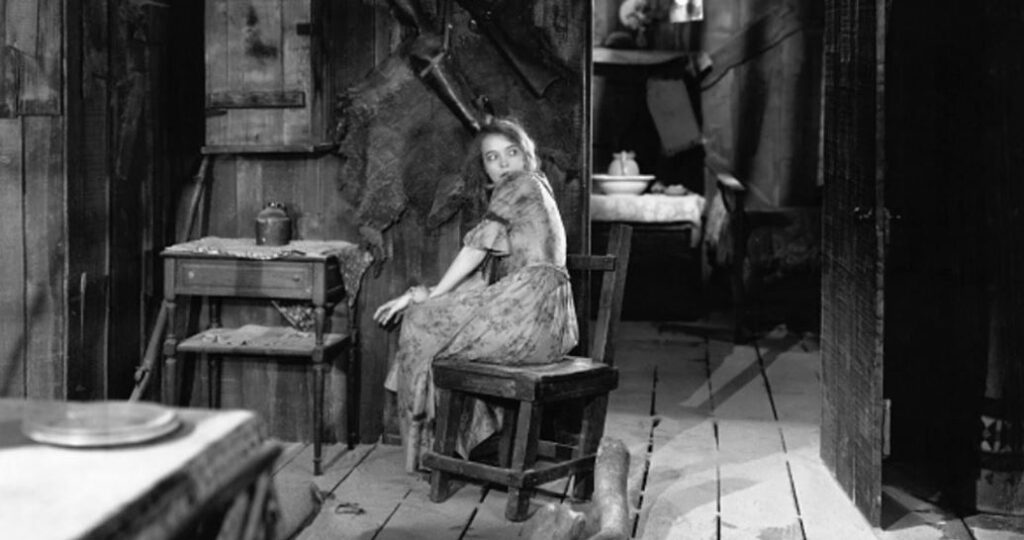
Hell, on at least a dozen occasions, the soundtrack stopped altogether, leaving in place the true definition of a silent film. But when the voices returned as heaving gulps of gargling glass, my long-desired nap became impossible. Was someone dying? Pleasuring herself? Anything is possible. Still, here, decades before she ruined the Beatles, America, and life itself, was the closest approximation to a Yoko Ono concert I’ve ever experienced. That nothing matched the action on screen was the least of my worries. Part of me wondered if they scored the wrong movie altogether. Perhaps someone saw “The Wind” and assumed it was Andy Warhol’s latest. In any case, as the film reached its climax, with the wind whipping unabated – still – I allowed for the possibility that were there another audio option, I might have enjoyed myself. But with the soundtrack to a death house? Not possible. Not ever.
Leave a Reply