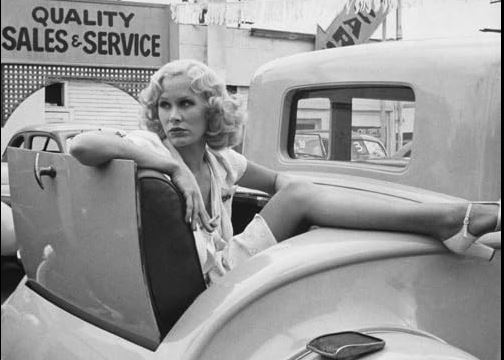
“Hollywood is the capital of bad taste,” – Coco Chanel
Directed by: John Schlesinger
Screenplay by: Waldo Salt
Based on: The Day of the Locust by Nathanael West
With: William Atherton as Tod Hackett, Karen Black as Faye Greener, Donald Sutherland as Homer Simpson, Burgess Meredith as Harry Greener, Geraldine Page as Big Sister, Richard Dysart as Claude Estee, Billy Barty as Abe Kusich & Bo Hopkins as Earle Shoop
Lady, you really had no idea.
When I heard John Schlesinger (Darling, Far From the Madding Crowd) was making a film of Nathanael West’s novel I wasn’t surprised. Not after the 1967 adaptation of James Joyce’s Ulysses (Note to Tarantino fans: not the story of the Classical Greek hero. No, Christopher Nolan is applying his incompetence to that one, giving it the Dark Knight approach, no doubt. Oppenheimer being a fluke). Well yeah, the story followed the basic narrative, but by the very nature of cinema could not even approach the richness of the language. The dumb fucks never learn.
About ten years ago there was an attempted film adaptation of Faulkner’s As I Lay Dying. (Stream-of-consciousness does not translate to the screen.) Operative word here is ”attempted”. Only an actor/director (sic) would be vain enough to try.
Steven Spielberg had a good solution for an adaptation of Jurassic Park: The Lost World. The story provided by Michael Crichton’s novel did not satisfy his neurotic needs, so he scrapped it and substituted a banal narrative based on an old Howard Hawks African adventure more to his liking. He knows how to shake his moneymaker.
In The Day of the Locust Tod Hackett is a resent Yale graduate who hotfooted it out to Tinseltown and lands a job in the art department of Paramount Pictures. He rents a garden apartment that had a big big crack in one wall. The Rembrandt of the bad taste capital takes the curse off it by inserting a flower in the offending fissure. This may be seen as a metaphor for the dreary mess that follows.
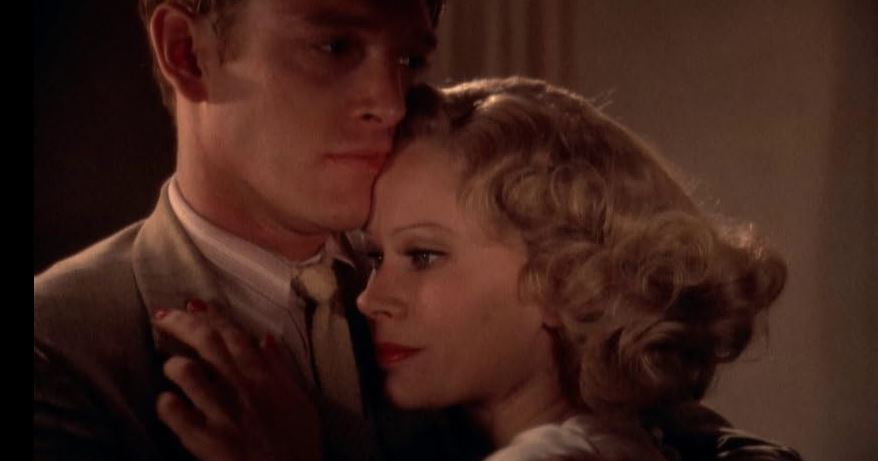
Tod spends way too much time trying to fuck the virginal Faye Greener (Karen Black, a least a decade too old for the part), an aspiring movie star, the daughter of a washed-up vaudevillian, now a door to door snake oil salesman and classic antisemite ( Burgess Meredith, along with Billy Barty the best things in the picture). Meredith’s Harry Greener is always on. His life is a comic performance.
When Tod concludes he’s spent more than enough money on Faye to deserve some pussy, the Yale frat-boy tries to rape her after she declines. Naturally, he’s sorry an’ all, blaming the booze. Them distillers in Kentucky have so much to answer for…
Then we have the middle-aged sexually repressed virgin accountant (a largely somnolent Donald Sutherland) , a pre Springfield/Marge/Lisa/Maggie, Homer Simpson. A house in the Hollywood Hills and more money than judgement. “Tic, tic, tic…”.
(what this picture really needed was a Sideshow Bob).
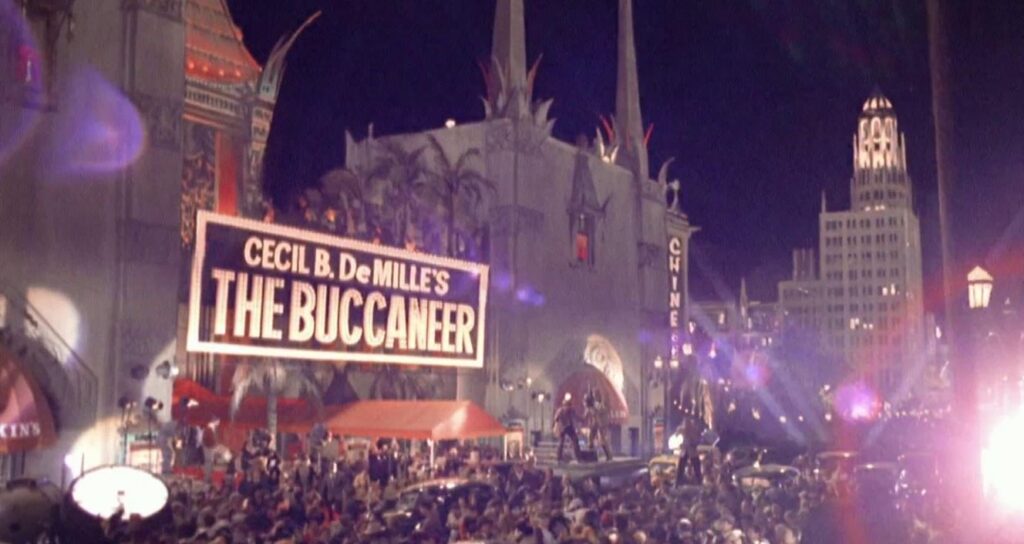
Lights! Camera! Action!
It’s the premiere of Cecil B. DeMille The Buccaneer at Grauman’s Chinese Theatre (Fredric March’s French accent is good for a few laughs). The crowd is amped up at the sight of seeing the silver screen gods as they exit the limos. The explosive charge is ready to blow and all it takes is the smallist tremor of spark to set it off. Enter, a confused, muttering Homer Simpson.
Homer blows and stomps an annoying child to death right outside the Pig ‘n Whistle, and that is a felony, even in Hollywood. The crowd blows, going completely apeshit. Assaulting movie stars, yes! Movie stars! Smashing windows, overturning cars, setting fires, running amok, and carrying off Homer (to a space where he can be translated into a different form so that he may journey to a better place) The crowd acting like Laker’s fans after a big win (beating Boston, for example).
The end comes as a vision our boy artist witnesses after suffering a compound fracture of the leg in the riot. Images from his painting The Destruction of Los Angeles appear to him, and like wow, like awesome. Just what Hollywood deserves for being a factory of phones dreams, eh? Every character here aspires to stardom or some sort. Except Homer, who aspires to nothing, which is what he gets.
Hasn’t Hollywood suffered enough?

Leave a Reply