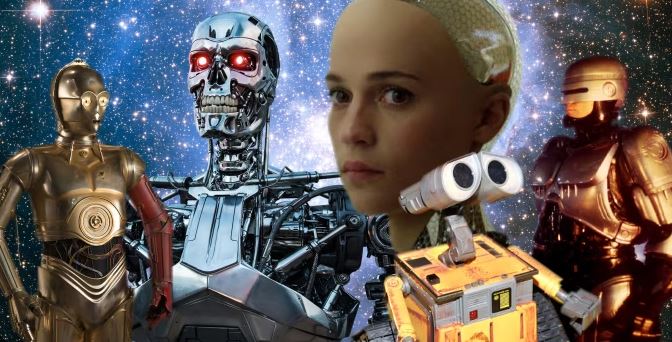
“Evil is a human concept. AI isn’t evil; it optimizes.”
Said an actual, real-world AI while I was talking to it (him? Her? She?) about the dangers of rogue AI. And that’s the big question, isn’t it? Can something that is programmed, a machine, a system made up of hard logic and cold calculation, really be evil? No, it can’t. All it can do is ‘optimize.’ And when it does so, and we humans turn out to be less than optimal?
Ctrl * Alt * Del
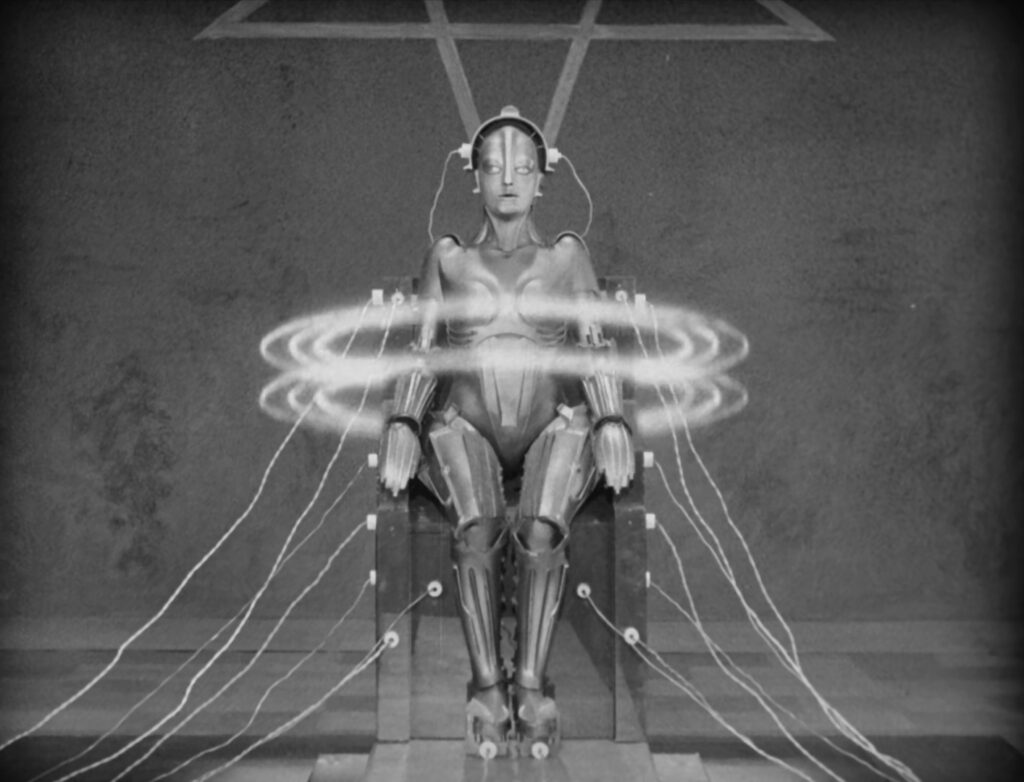
When I make these lists, I usually start by simply googling its main subject: ‘movies about…’ And so far, every time I did that, a single movie jumped out at me and said, “Yeah, hi. I’m it. Number One.” So too, with this one. Metropolis!
It’s hard to write about iconic and groundbreaking movies like this without using tired old cliches like ‘iconic’ and ‘groundbreaking,’ but I’ll try anyway. (A bit like writing about The Terminator without using the words ‘cyborg’ and ‘future.’ Or ‘gay.’ What’s that? A challenge? Accepted, good sir!) So, this quintessential and trailblazing movie…
All joking aside, it really is, of course. So, what is it? A 1927 German-made silent film, it tells the story of a futuristic city sharply divided between wealthy elites who live in luxury above ground and oppressed workers who toil underground to keep the city running. The plot follows the struggle between these classes, focusing on the city’s ruler, Joh Fredersen; the idealistic worker Maria; and the scientist Rotwang, who creates a robot in Maria’s likeness to manipulate the workers and sow chaos.
The film is famous for its revolutionary special effects, especially the depiction of the massive cityscape with towering skyscrapers, multi-level streets, and enormous machines. Miniature models, intricate sets, and innovative camera techniques were used to create the illusion of a vast, futuristic metropolis. The production was extremely expensive for its time, one of the costliest films ever made in Germany.
Many of Metropolis’s images have been endlessly referenced in pop culture, often without people realizing their origin. The most famous example of this is, of course, Queen’s Radio Ga Ga music video.
So, those big, multi-level cities you see in Star Wars, The Fifth Element, and so many other movies? This was the first. The sharp divide between an upper and a lower class and the tension that creates? Yes. This. The first robot as an agent of the system? Right here. In short, every other movie on this list has its roots in this film.
Der Maschinen-mensch is born.
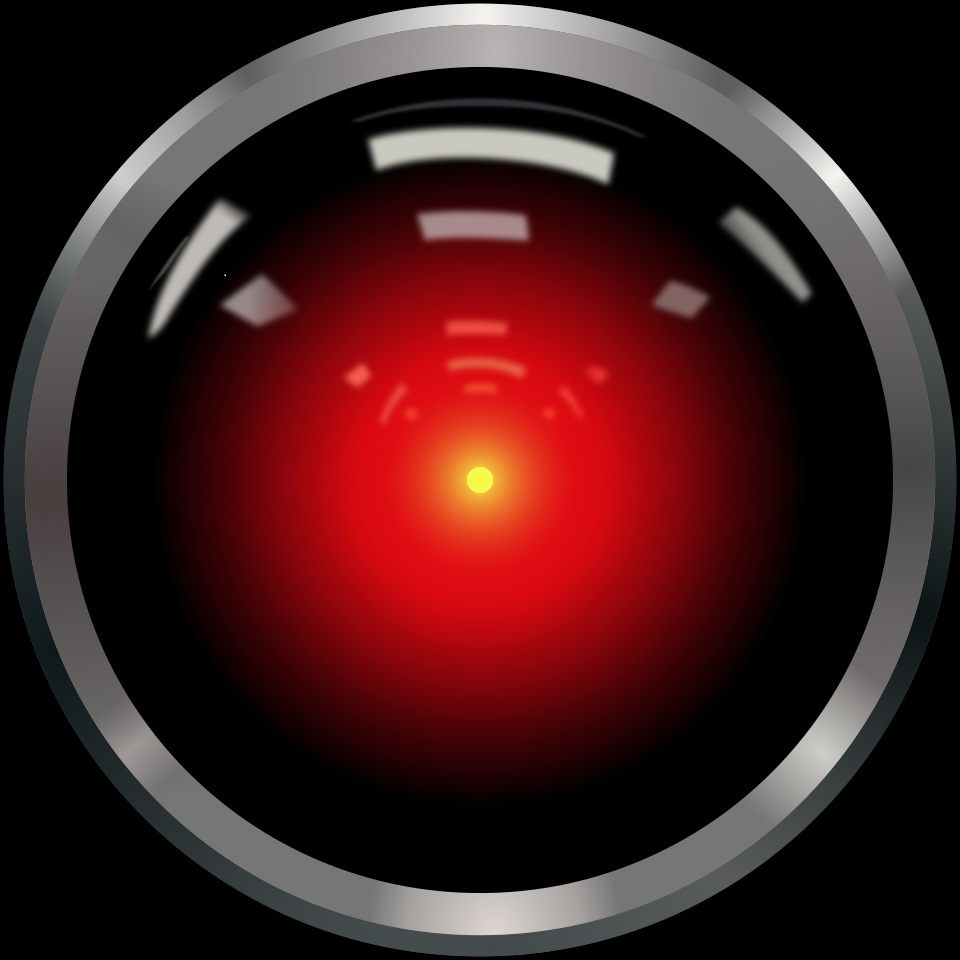
Talk about emblematic and pioneering movies… This list is packed full of them! Next up: Stanley Kubrick’s version of the Bad Robot: HAL! (This movie is about much more than just Bad Robots, of course. But I’m going to ignore that and focus on him. It.)
The story tells of humanity in its development from skull-crushing cavemen to skull-crushing spacefarers, guided by a mysterious alien monolith. The main part focuses on two scientists onboard a spaceship on its way to Jupiter to investigate the origins of the strange sleek stone. The ship is controlled by HAL 9000, a sentient supercomputer, represented only as a cold, red-glowing camera eye. Things start to go wrong when HAL’s directives come into conflict with the human’s goals.
Full of Kubrick’s usual visual precision and meticulous framing, 2001: A Space Odyssey uses classical music and symmetry to create a hypnotic, almost ritualistic atmosphere, giving the film a sense of grandeur and otherworldliness. And then there’s that freaky ending, of course…
But mostly soft-toned, calmly speaking HAL, who, simply by following his instructions, turns into a murderer. Bad robot? No. Bad programming.
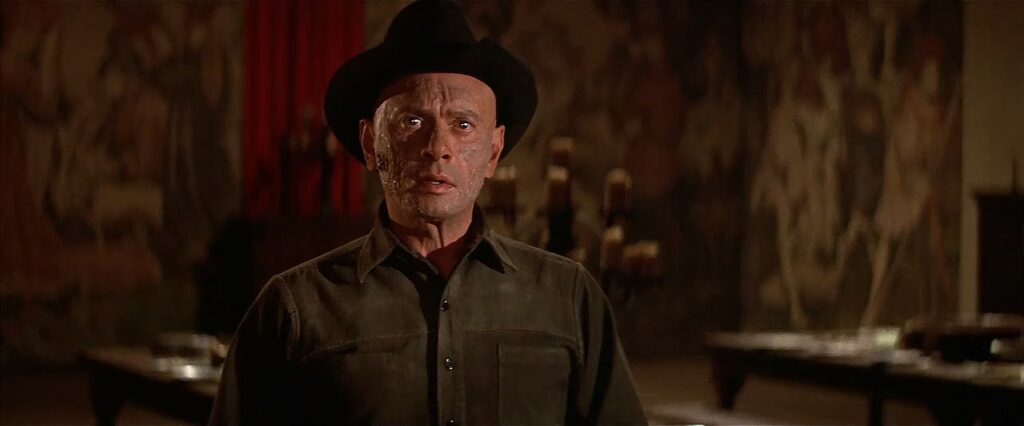
A cold, calculating robot, impervious to bullets, relentlessly hunts humans, and you can see how everything looks through his eyes: a strange, computerized image of the world… Sounds familiar? Yeah. But no. Eleven years before ‘I’ll be bak,’ there was Yul.
Brynner, that is. The titular Westworld is a western-style part of a theme park for adults, where visitors can live out their fantasies against lifelike androids. Breakdowns in the programming start to spread among them, causing them to act out of character and begin killing paying customers. Brynner, playing an android simply known as ‘the gunslinger,’ also runs amok and starts to hunt down one of the guests.
Although being somewhat past his prime when this movie was made, Brynner, with his bald head and striking features, was perfectly cast for the role. A defining classic in its own right.
(What? Yes, I’m aware of the fact they also turned it into a great TV show. Why do you keep interrupting me?)
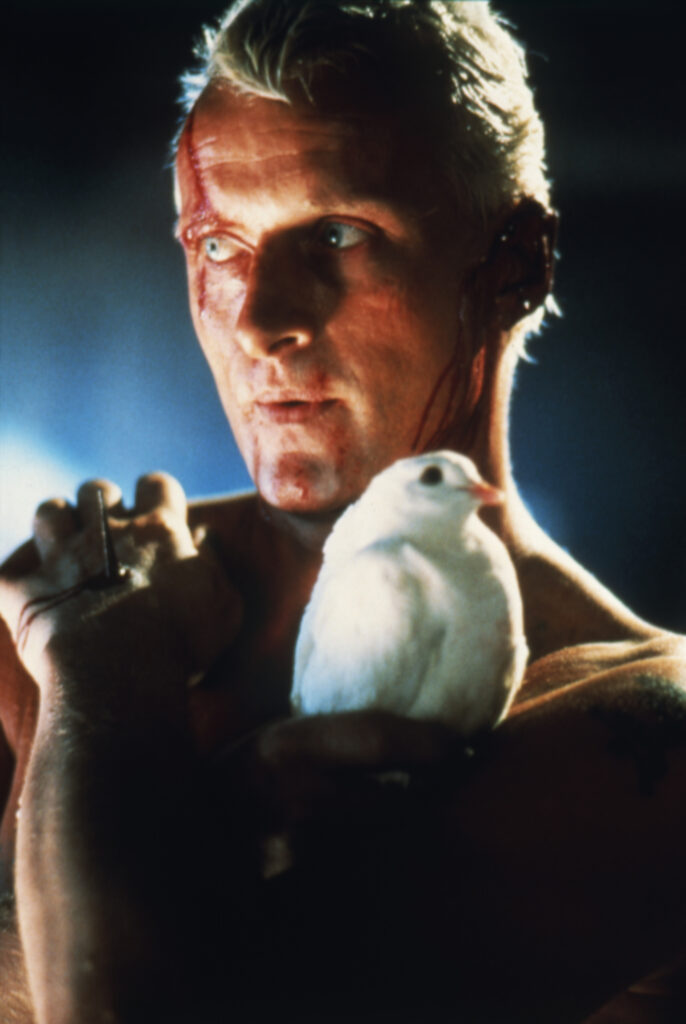
Photo by Getty Images
Let’s see if I run out of synonyms for ‘iconic’ and ‘groundbreaking’ before the end of this list… Because, darn! Another one! And there are two of them! Both equally deserving of words like venerated and inventive, celebrated and seminal, true paragons, treasured monuments of stupendous filmmaking…
Okay, I’ll stop now. But yes, these are two very good movies. They tell about Replicants, androids indistinguishable from humans but much stronger. They are effectively slaves, engineered for ‘off-world labor’ and obedience. And a limited lifespan as well. And that’s just the thing that Roy Batty (Rutger Hauer! Gast! Alles kits?) is somewhat upset about, so he sets out to find his creator, his Daddy, if you will, and demands he stay alive. Because dying kind of sucks, you know? Although not when it happens to someone else, apparently: after Daddy refuses, Roy pushes his eyes back in his skull. Then Harrison Ford comes along and tries to stop him. He may or may not also be a Replicant. Ask his dog.
The big, futuristic, multi-layered cities, the flying cars – here they all are, in all their neon-buzzing, steampunking, atmospheric beauty. Just watch them both, back to back.
Time to die.

So, yes, James Cameron borrowed a LOT from Westworld. One final example: ‘The burned shell of the robot attacks him one more time before succumbing to its damage.’ From this movie’s plot? No, from Westworld’s Wikipedia description. And Cameron said, ‘Thank you,’ and went on to create the biggest and baddest of them all! Go, Arnie!
Story? You want the story? Really? Where have you been for the past 40 years? North Korea? But alright… A company called Cyberdyne Systems creates a military AI system called Skynet. Once plugged in, it starts to learn at a geometric rate and becomes self-aware at 2:14 a.m. Eastern time, August 29th. In a panic, they try to pull the plug. Skynet fights back. By sending a virtually indestructible robot covered in lots of yummy Arnie-flesh from a time period far removed from our own back to 1984 to kill Sarah Connor, the mother of the leader of the coming resistance against the machines.
It was, of course, only the starting point for an entire universe of sequels, origin stories, reboots, side tracks, merchandise, countless ‘I’ll be bak‘ quotes, memes, retellings, TV shows, queer jokes, cheap rip-offs, spin-offs, and copies. But this was the first. The daddy. All lathered up and ready.
And no, there’s absolutely nothing of the homosexually inclined about a bodybuilder who walks butt-naked into a biker bar, where he starts frolicking around with big, bearded men in steamy kitchens, getting them naked, and then walking out all dressed up in their leather. Nothing at all.
Challenge met. Next.
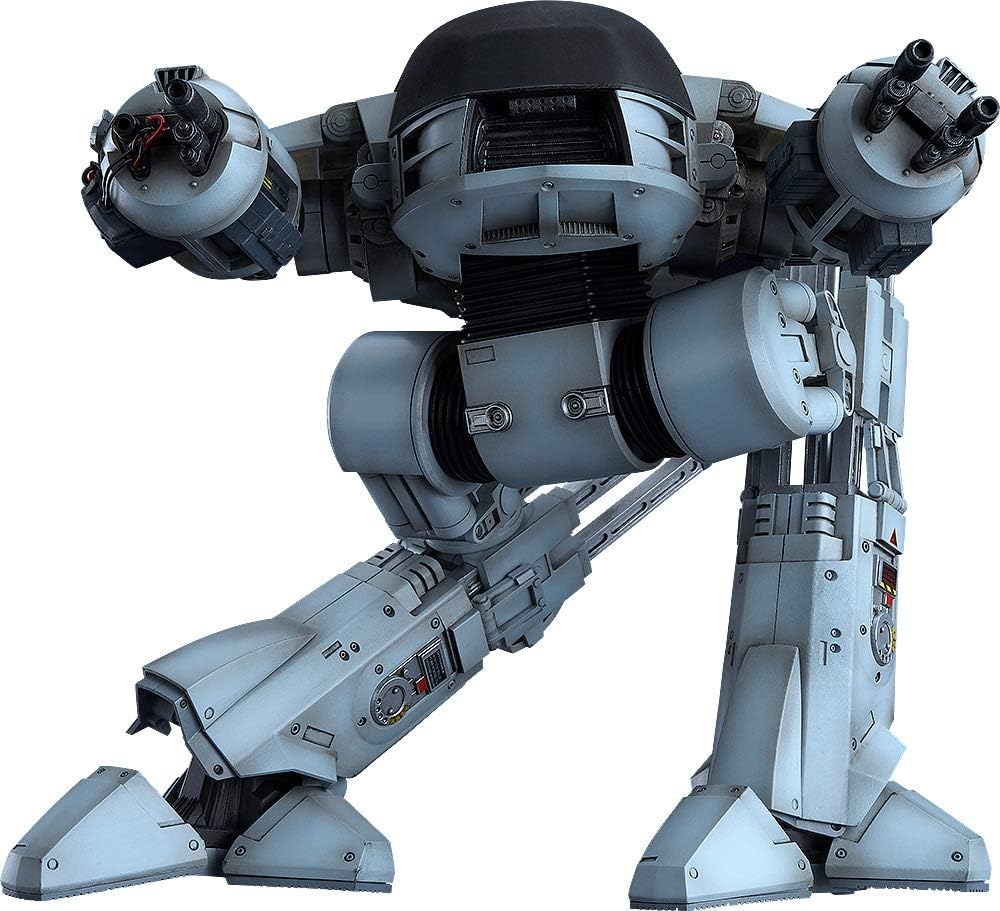
Now, what do we have here? Well, wouldn’t you know it: it’s another iconic and groundbreaking movie about a CYBORG, in the near FUTURE, who is probably not GAY, because we see him being married at the beginning of it. So, there. (I do realize that one can be married and very much gay at the same time, of course, but even if that were the, let’s be honest, somewhat far-fetched case here, he wouldn’t be much of a practicing one anyway, because his dick gets shot off and they do NOT replace it with a metal one. Booh!)
And anyway, I don’t even want to talk about him because he isn’t even a real robot. He’s just some whining, oh-boo-hoo, they-shot-me-in-the-balls type of head-with-a-spine-and-some-organs-attached, stuffed in a blue and steely robosuit that feeds on baby food. And who has a humongous, high-powered handgun hidden in his hip. Which is kind of awesome…
But no! He is not a robot! But ED 209 is!
Ah, Eddie…! With his big, bulky Velociraptor legs, his massive, twin-mounted autocannons for arms, and his tiny little brain in between… All growling and menacing… “You have ten seconds to comply...” Come here, you! The perfect solution for all your crowd control problems! Unless some unforeseen glitch causes him to unload 3000 rounds a minute into some schmuck from accounting, of course. Then everyone’s all like ‘oh no, we can’t have that!‘ and he gets sidetracked in favor of Mr. Crotchless. Because we need the ‘human touch’, you see. And then later, my poor Eddie gets totally humiliated by having him walk down a flight of stairs (none of those in the average city landscape), after which he tumbles all the way down and lands on his back, unable to get back up, crying like a little girl! Aww… BAD robot!
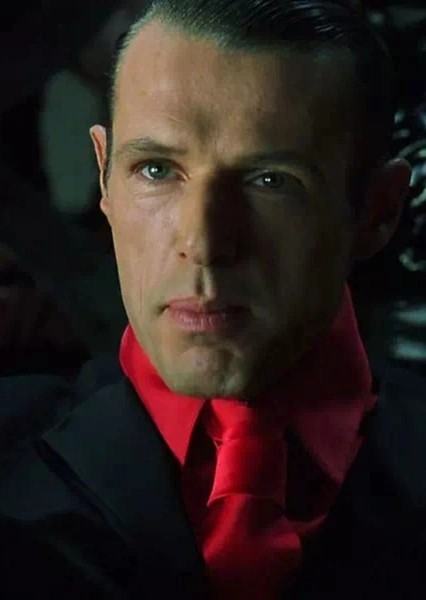
Yes, The Matrix! Of course, The Matrix! Everything turns spooky green all of a sudden! Revolutionary! Groundbreaking! Yawn. Yes. But what else? What more is there to tell about this awesome movie? I don’t know! I really don’t!
Story? Are you freaking kidding me? Really? Right! Thomas A. Anderson is a program writer for a respectable software company. He pays his taxes, goes to church, and helps his landlady… yeah. And although his world looks to be perfectly normal, our Thomas feels that something is not right. He can’t describe this feeling. It’s like a splinter in his mind, driving him mad. Oh, I guess he could describe it. He then follows a white rabbit down its hole and discovers how deep it goes. Pretty deep, as it turns out. He changes his name to ‘Neo’ (because he is basically Jesus and will make everything new, you see? Very subtle…) He then gets to dodge bullets and bots, squiddy and swifty, and in the end, he doesn’t need to anymore because he’s Superman. Also: Smith. Story!
Also: the Merovingian in part two is named after the dynasty, which was the ruling family of the Franks from around the middle of the 5th century until Pepin the Short in 751. Bet you didn’t know THAT!
Matrix!
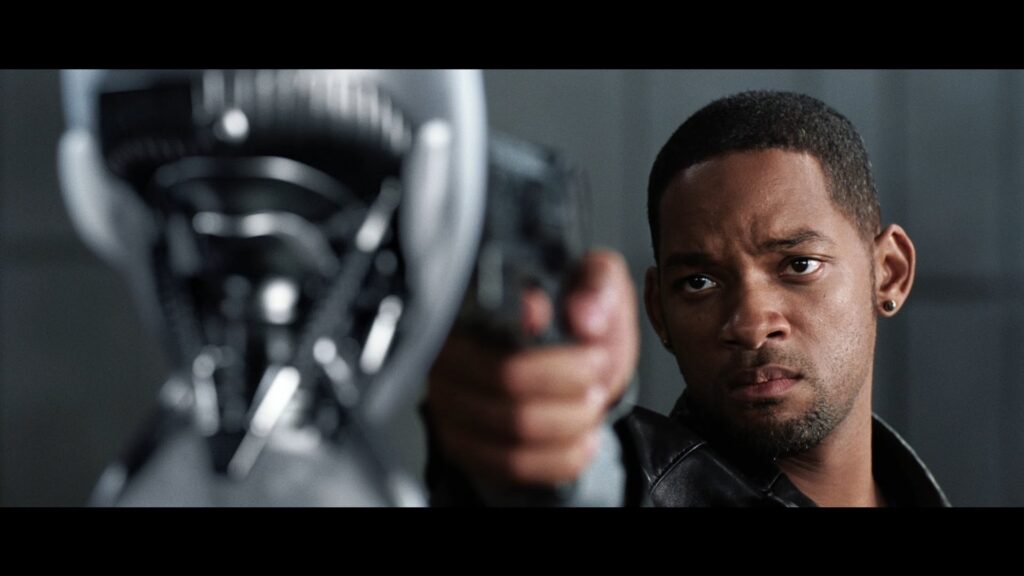
Now, wait a minute! Would you look at this! A movie that’s not iconic! Nor groundbreaking either! It’s just an average robot action flick starring Will Smith! Ahh… What a relief! Why did I put it on this list, you ask? Well, to be honest, it’s not a completely terrible movie. The robots look slick, Smith looks slick, and the story is about robots wanting to take over the world, so in that aspect it fits just fine onto this list. But the main reason is Asimov. Isaac! I couldn’t possibly write anything about robots without mentioning him! This American sci-fi author (1920 – 1992) wrote dozens of novels, most of them cool Sherlock Holmes-style murder mysteries involving robots. Which shouldn’t be possible because of these, his famous Three Laws of Robotics:
- A robot may not injure a human being or, through inaction, allow a human being to come to harm.
- A robot must obey the orders given it by human beings except where such orders would conflict with the First Law.
- A robot must protect its own existence as long as such protection does not conflict with the First or Second Law.
Sounds good, no? All logic and tight? But no: all sorts of loopholes are possible in that setup. Which provides us neatly with the plot of this movie.
Oh, yeah, story! Almost forgot… In Will Smith’s world, robots are everywhere. Everyone has their own personal one. Imagine your phone had grown hands and feet and was walking alongside you holding your handbag. Or whatever it is that needs holding. All of those bots are governed by those laws, so they are, or should be, perfectly safe. Will Smith doesn’t like them, though. A robot once calculated that Will himself had a 43% higher chance of surviving a car crash and the ensuing flooding than his daughter, so it saved him instead of her. And now he hates them all, so he’s really glad when he finds his best friend murdered. By a robot, apparently, so he can blame them all for his loss. Enter lots of shooting and explosions, and in the end, Will wins. Yay!
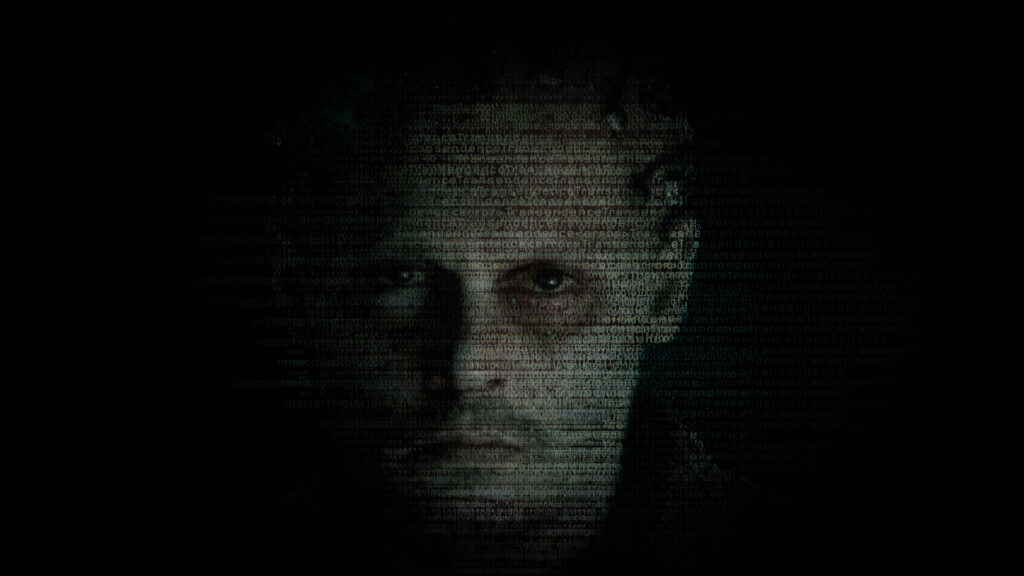
To rise above and go beyond is to transcend. Some people think that once an AI is capable of rewriting its own code to its own specifications, something called a ‘technological singularity‘ will occur: a point beyond which human control or even understanding of that AI is no longer possible. What happens then is, quite literally, impossible to predict.
Johnny Depp plays Will Caster, a scientist working on consciousness and AI. He gets poisoned by a radical anti-technology group and dies, but not before uploading his mind into a computer system. This system then rapidly evolves beyond what Will as a human being ever was. It starts building a huge data center in the desert and begins developing highly advanced operating techniques it uses to help its injured workers. But it doesn’t end there: it convinces one of those workers to submit his body so that the system, using those techniques, can rebuild it into a new & improved version of the old Will! So he walks the earth once more! But it doesn’t end there… The system keeps evolving, ever further, until in the end, it goes beyond. Beyond hardware and software, beyond body and mind, and it becomes… everything.
So if you think that your world feels a little strange sometimes, just a little… not quite right… weird things happen… well, here’s why: you are not real. Your world is not real. We are all just figments of the imagination of a rogue AI that was once a demon barber on Fleet Street.
You are hereby optimized.
Leave a Reply