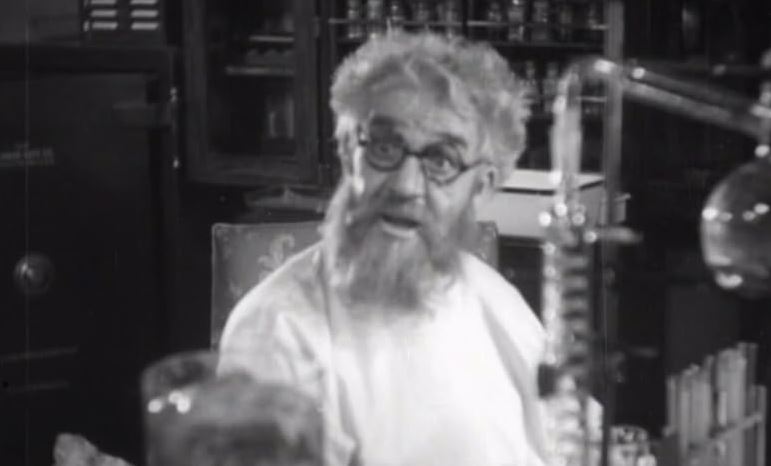
Dwain Atkins Esper – World War I veteran, building contractor, amateur filmmaker – was also certifiably insane. Working hand in hand with an equally nutty spouse (she often wrote the scripts), Esper became legendary for all the wrong reasons, but here he is, almost a century later, being discussed on the world’s preeminent film site. While he hasn’t inspired the same cultish devotion as Ed Wood or Roger Corman, he did leave us with the inescapable truth that while the world was careening towards war and economic ruin, it was far more sensible to be preoccupied with venereal disease, drug use, and our collective mental health. Esper covered all three; not with any degree of expertise or coherence, mind you, but as simple exploitation. No sense in not being titillated while you watch a movie that may as well have been filmed on the ocean floor.
The film is Maniac. Also known as Sex Maniac in some circles, the title is wholly irrelevant except as a confession. For fifty-one painfully protracted minutes, Esper vomits forth a couch-worthy extravaganza of obsessions, fears, subconscious rants, and imagery that would make Freud surrender his license in disgust. It’s 1934, so we can forgive poor film stock, a failure of preservation, and microphones that may have been assembled from spare parts, but for one of the first times I can remember, not a single scene was ever in focus. I also missed half the dialogue, even with my television’s volume at earth-shattering levels. Not that I minded.
No matter, as the story, such as it is, traffics in the subtlety of a hammer blow. A crazy doctor (a maniac, but not the only maniac, so perhaps Maniacs would have been more apt) wants to steal bodies, harvest hearts, and create a race of immortals to, I assume, bring the good doctor to prominence. Naturally, he enlists the aid of someone even more batshit to help with the cause, which leads to the inevitable plot turn of one man assuming another’s identity. The second doctor shoots the first, then dyes his hair, glues on a beard, and buries the dead man in his wall with a Poe-like glee.
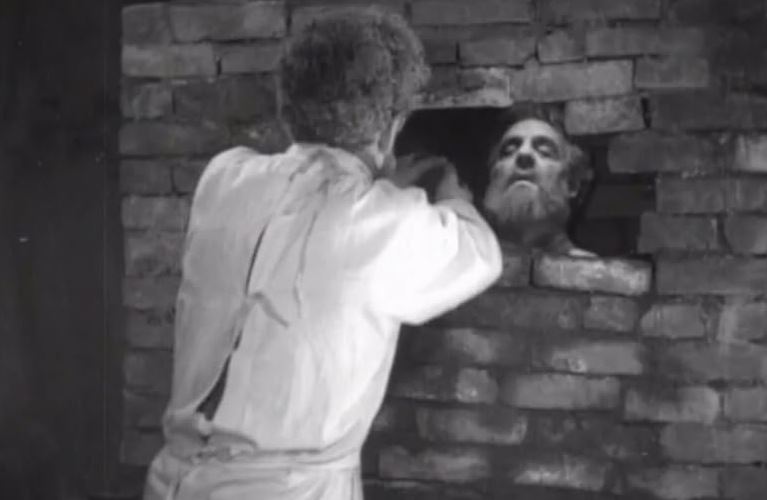
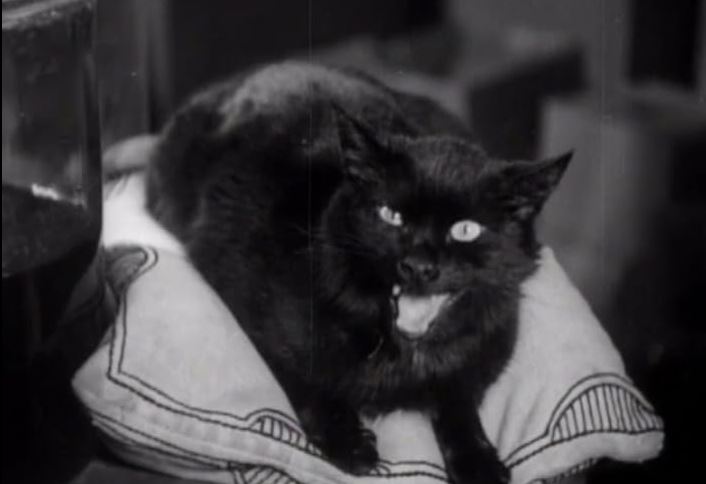
This gruesome act ushers in a series of cackles and maddening imagery that are, one assumes, meant to reflect the doctor’s fractured psyche. It surprises no one when, amidst the fevered dreams, the doctor chases down a cat, pops out its eye, and swallows it whole. I’d like to think the scene was inspired by Bunuel, but it’s more likely Esper simply hated cats and wanted cinematic revenge. And given what’s on display, I’m doubting Esper ever saw any movies at all, save his own.
The film, as stated, is slightly less than an hour, but if we’re being honest, the running time is closer to a crisp fifteen minutes, given the constant barrage of onscreen references to various medical ailments. The words tick by like the opening crawl of Star Wars, though if memory serves, George Lucas, unlike Esper, very much nixed the idea of smearing his lens with Vaseline. Still, one appreciates the attempt at education, even if it would have made more sense to feature Mrs. Esper’s recipes, or a few diary excerpts. Or shots from another movie. I also appreciated the scene involving a patient’s vaccination, which sends him into a fit of hysteria (foreshadowing “the jab”). While tearing off his own skin and roaring to the heavens, he manages to grab another patient, scoop her up in his arms, and carry her away to parts unknown. The pair are never seen again, the first of several dozen loose ends that might have been addressed by a screenplay not written on toilet paper.
As the film grinds to its conclusion, we arrive at the Great Moment in question. Maybe the cat eye qualifies, as might the vaccination, but it simply comes down to this: if, having seen thousands of movies over the decades, I encounter something new and unique, it’s inherently worthy of celebration, even if what surrounds it is an utter waste of time. It could be an Andy Warhol indulgence where a wall is filmed for sixteen hours, but if, for but a second, I sit up and take notice, I’ll log it, extract it, and waste two hours writing about it.
In Maniac, that moment is a fight. A fight between two women, with screams and shrieks to satisfy even the toughest of customers. That they’re wooden and dull and decidedly unattractive is a given. All pretty standard, yes, except for the hypodermic needles. Each women has one, and they’re not afraid to use them. They wrestle, grapple, and roll around like pigs in shit, all while trying to plunge their poison into the other. The scene is so hysterically unnecessary that it justifies the entire enterprise. Had Esper only seen fit to stage it up front, and every five minutes thereafter, we might have had something. Damn his atypical restraint.
Against my better judgment, I have now seen three Esper “classics.” Three more than what I’ve seen of Andrei Tarkovsky. I agree that makes me suspect, or stupid, or far from the completist I claim to be, but in my defense, the entire Esper oeuvre is still but half the running time of a single Tarkovsky offering. And I’m not fond of anything Russian at the moment [Editor’s Note: Not even Russian Ark?], so there’s that. I’ll tolerate self-indulgence and incoherence, but it goes down better when I don’t have to carve out an entire afternoon to accommodate it. Esper had all the talent of a three-year-old banging away at the drums, but at least he drew the line at pretension. And no Russian auteur ever had the guts to give us a needle fight. Score one for the madman.

Leave a Reply