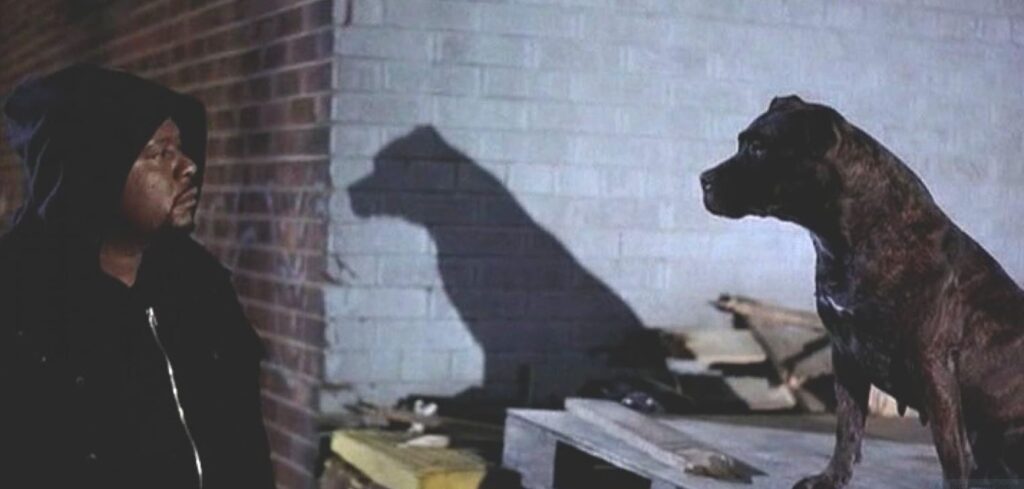
“The Way of the Samurai is found in death. Meditation on inevitable death should be performed daily. Every day when one’s body and mind are at peace, one should meditate upon being ripped apart by arrows, rifles, spears and swords. Being carried away by surging waves. Being thrown into the midst of a great fire. Being struck by lightning, being shaken to death by a great earthquake. Falling from thousand-foot cliffs, dying of disease, or committing seppuku at the death of one’s master. And every day, without fail, one should consider himself as dead. This is the substance of the Way of the Samurai.”
Big cities have stories. More than you could ever count. More than the streets themselves could hold. Most of them pass unnoticed, slipping through the cracks of everyday life like smoke from a forgotten cigarette, leaving behind only faint traces. And yet, some stories refuse to disappear. They settle under your ribs. They make the city pause, just long enough for you to notice.
“There is something to be learned from a rainstorm. When meeting with a sudden shower, you try not to get wet and run quickly along the road. But doing such things as passing under the eaves of houses, you still get wet. When you are resolved from the beginning, you will not be perplexed, though you still get the same soaking. This understanding extends to everything.”
I first heard about Ghost Dog on a gray October afternoon, years ago. I was in the back of a cab, drifting through streets I had thought I knew. The drizzle fell thin, persistent, muting the city like a soft gray filter. Paul Oakenfold played somewhere on the radio, a slow, drifting mix that crept into my chest. It made the streets pulse differently. Everything slowed down. The city softened. The noise became a rhythm I could feel but not name, and for a while, I allowed myself to simply breathe with it.
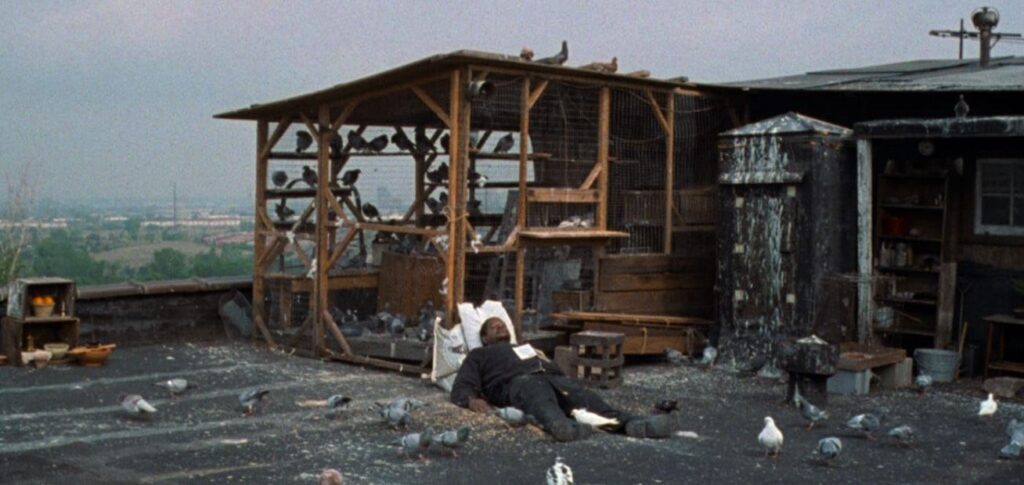
Ghost Dog didn’t belong here. Not really. Some said he lived on a roof, surrounded by pigeons that carried messages in his place. Some said he spoke to no one, yet everyone somehow understood him. Some said he carried a book, Rashōmon, tucked beneath his coat. A lens to see the world, to understand that truth is never a single line, but a fragile web of perception, shaped differently by every eye that falls on it.
“It is a good viewpoint to see the world as a dream. When you have something like a nightmare, you will wake up and tell yourself that it was only a dream. It is said that the world we live in is not a bit different from this.”
He had a past. A debt. Louie, the man who ran a little corner of the city no one else noticed, had saved him once, when Ghost Dog was just a pup. Louie saw him, extended a hand, and offered protection. Years passed, and the boy disappeared from sight. And then, one day, he appeared at Louie’s door. No words of thanks. No casual conversation. Just presence. Calm. Deliberate. A quiet offer. He would work for Louie. Not out of love. Not out of fear. Out of loyalty. Out of code. A hitman.
Louie remembered that moment differently than the boy did. For him, it was sudden, almost impossible. A boy returned as a man, carrying his history in silence. For the boy, it was the fulfillment of an unspoken promise. For everyone else who glimpsed him, it was myth made flesh. And yet, all agreed: when Ghost Dog walked, the city itself seemed to yield.
The men Louie worked with were older than time, or at least it felt that way. Wrinkled old reptiles sitting in the backroom of a convenient store, deciding life and death over stale coffee and the smell of sawdust. They did not move quickly. They did not shout. They waited. They watched. And when Ghost Dog carried out a task, they whispered about him, calculated him, measured him. Even then, they could not fully understand him. He was younger, faster, quieter than anything they had ever known.
Ghost Dog had companions, of sorts. Raymond, the Haitian ice-cream man, who spoke in French and gestures, and who Ghost Dog understood perfectly without words. Pearline, the girl who collected stories, learning without asking, following him quietly, absorbing the rhythms of his world. Words were unnecessary. They understood him. He understood them. And Louie, the man whose life he had saved, trusted him completely. Ghost Dog worked for him not out of affection, but because code demanded it. A samurai code of loyalty, silence, discipline. Honor over survival. He carried it all like a ritual, each movement precise, every step measured. Even when he executed his assignments, it was never haste. It was inevitability. Ritual. Silence.
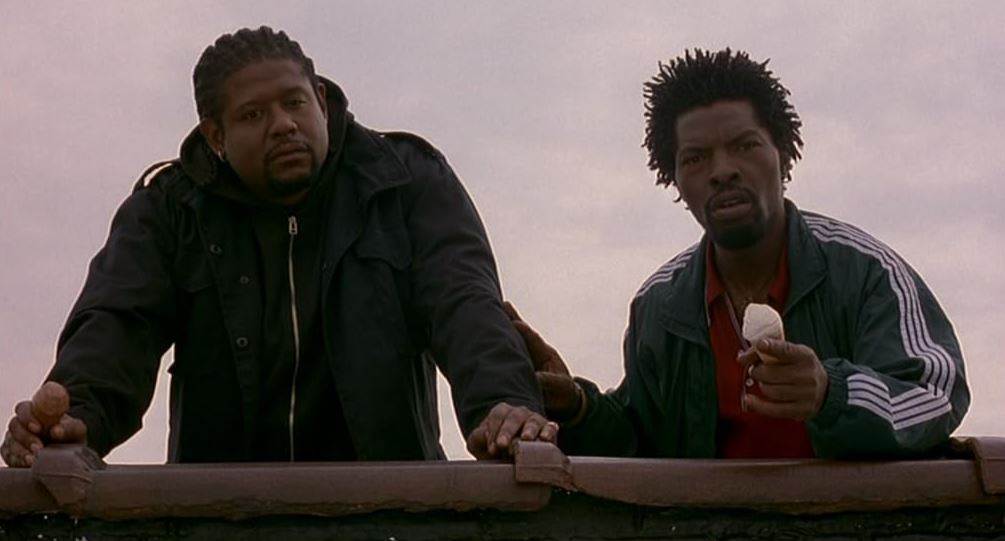
I did not see these events. I only pieced them together later, from whispers drifting across rooftops, fragments carried between corners, rumors that fell from the sky with the pigeons in the evening light.
“Even if one’s head were to be suddenly cut off, he should be able to do one more action with certainty. With martial valor, if one becomes like a revengeful ghost and shows great determination, though his head is cut off, he should not die.”
And yet the stories never fully aligned. Different witnesses, different angles. Louie’s memory. Pearline’s perception. Raymond’s senses. The maffia’s calculations. Each fragment true, each fragment incomplete. The Rashōmon effect, alive in the streets, breathed in the pigeons, the rooftops, the gray drizzle. Reality itself seemed to split and recombine in layers of observation.
Some stories are violent. Some are quiet. Some are ritual. Some are poetry. Ghost Dog embodied all of it. The killings, the city, the pigeons, the girl, Louie — they were all part of a single rhythm, a single invisible code, a single story told from infinite angles.
“It is bad when one thing becomes two. One should not look for anything else in the Way of the Samurai. It is the same for anything that is called a Way. If one understands things in this manner, he should be able to hear about all Ways and be more and more in accord with his own.”
And every time I ride the streets, somewhere between nowhere and Midtown, Oakenfold spilling music like memory into the cab, I feel him.
The city continues. The rain drifts. Music plays.
Leave a Reply