Two become One
There were three red flags for me going into 28 Years Later: The Bone Temple. The first flag is the entire franchise is decidedly mediocre. All three movies to this point have been very forgettable. I’ve already forgotten the third one despite the fact that I watched it less than a month ago. The second flag is that The Bone Temple is the fourth movie in the franchise. Each of the first three movies has essentially the same plot – don’t get eaten by zombies. Why would we expect anything different in The Bone Temple? The third flag is The Bone Temple got a mid-January opening. Woof.
It would be an understatement to say I was pleasantly surprised by how good was The Bone Temple. The truth is I was almost in awe. I just wish it hadn’t taken writer Alex Garland three sequels to realize the zombies were only the story in the first movie of the franchise.
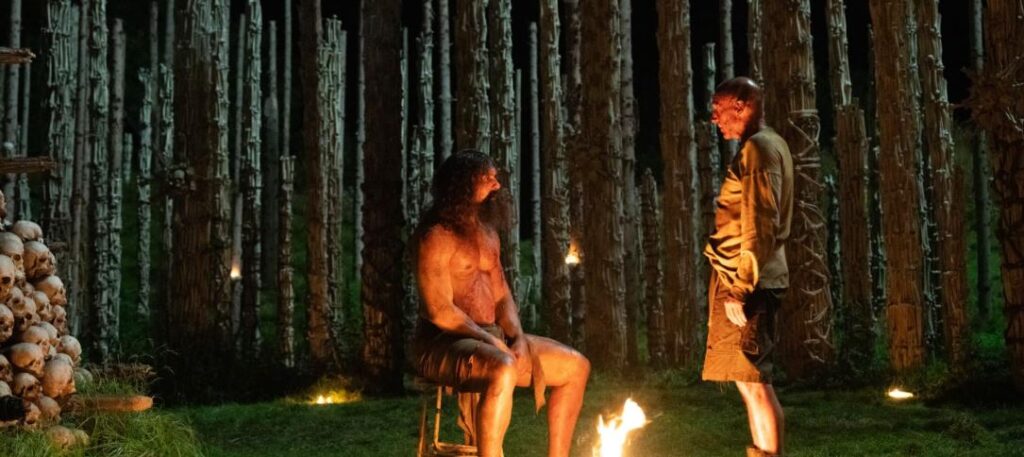
The Bone Temple is a direct sequel to 28 Years Later (both movies were filmed together), but it’s also a companion piece. The Bone Temple features two completely separate story arcs that eventually converge with each other. One features the continued adventures of young Spike (Alfie Williams) after he strikes back out into the quarantine zone at the end of the previous film. The other features Dr. Ian Kelson, the doctor Spike seeks out in the previous film in the hopes his sick mother can be cured. By themselves, each story is interesting, but not enough to carry an entire movie. But put them together and, oh man have you really got something good.
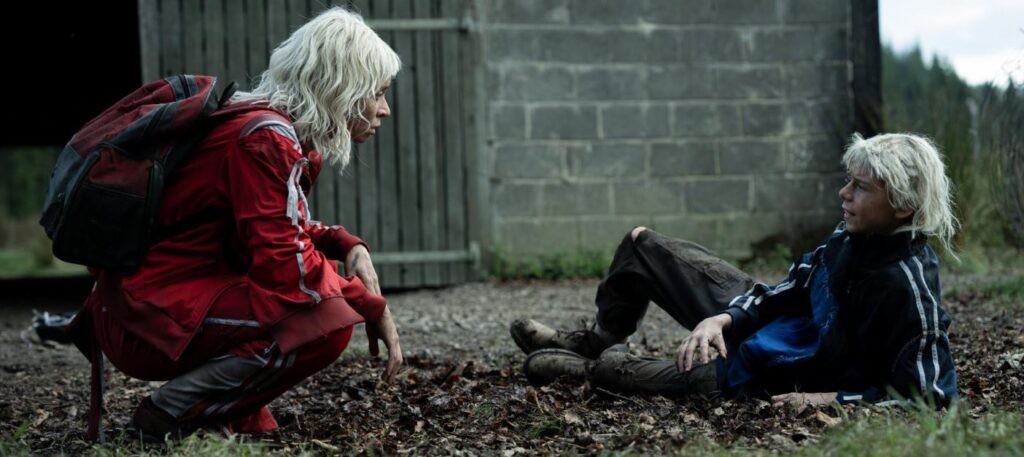
On one side of the movie, young Spike has found himself trapped in a small Satanist group led by Sir Lord Jimmy Crystal (Jack O’Connell). The group represents the de-evolution of man in almost every way possible. They have stopped thinking for themselves, completely subservient to Jimmy Crystal. They have no home, roaming the land and taking what they want through violence and killing. They even fight amongst themselves on occasion, culling the weakest from the group whenever they happen upon a new non-zombie person who might prove useful. Spike is terrified, but nearly helpless to extricate himself due to him still being a small human adolescent.
On the other side of the movie, Kelson has taken a scientific and medical interest in an alpha zombie he’s named Samson. Samson represents the evolution of man. Using blow darts tipped with a healthy dose of morphine, Kelson has discovered that he can sedate Samson to the point that Samson won’t try to rip Kelson’s skull and spine from his body. Kelson has also discovered that while Samson is sedated, Samson is responsive to things like music, dancing, and conversation. Kelson’s theory is that the rage virus suppresses brain function instead of just killing it (among other things) and the morphine is able to counteract that suppression to a certain degree. Make no mistake, Kelson isn’t trying to cure the virus, just understand it a bit better. More importantly, the entire experiment is returning some of Samson’s humanity.
As you can see, these two storylines perfectly compliment each other. Given that, it makes perfect sense that they would crash into each other, raising a final question – which version of humanity will persevere?
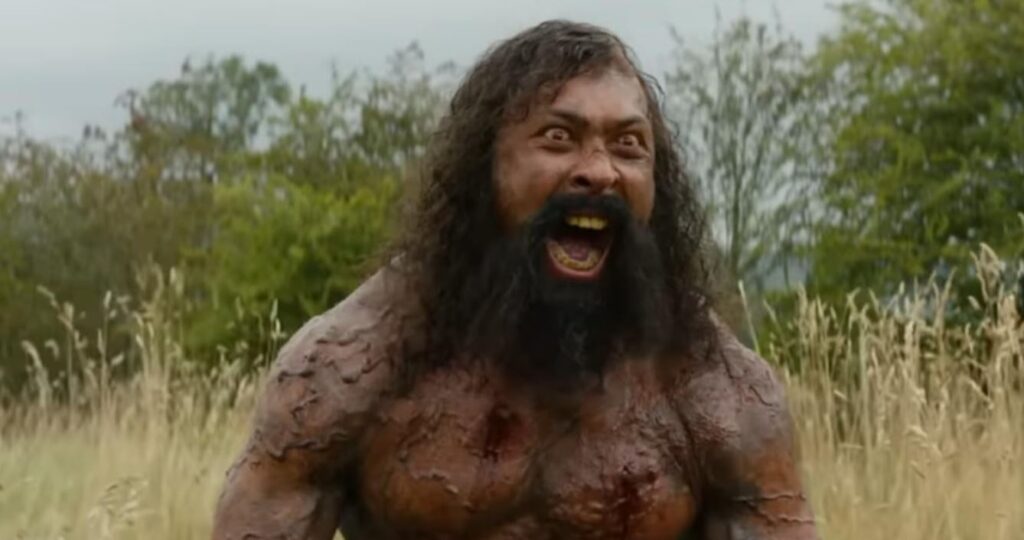
There are a couple of things that make the movie so compelling, beyond those two storylines. One is spending real time exploring the virus itself. Most zombie films don’t bother with this because that’s not the point. Just like the first film in this franchise (28 Days Later), the point is survival of the remaining non-zombified humans. But dissecting how the virus works allows The Bone Temple to explore some of what makes us human.
The second is focusing on how humans behave decades after the initial fall of civilization. The Walking Dead does this really well, even though it can’t quite get out of its own way with the zombies. In The Bone Temple, the zombies are part of the environment, even Samson. Instead of being an existential threat that is always run from, they are something to be studied and understood. Even The Walking Dead never goes that far (if it did, it was after I grew bored of the show and quit watching).
The last thing is a scene that is (already) known as “The Iron Maiden Scene.” I’m not going to tell you anything about this scene other than it’s simply amazing. The last time I saw a scene as good was in season four of Game of Thrones when Tyrion Lannister rips into everyone after being accused of murdering Joffrey. The Iron Maiden Scene is the only time I can remember the entire theater audience bursting into applause after a scene that didn’t involve a climactic battle or a villain getting their just desserts or the movie ending. And that applause happened again at the end. The movie really was that good.
Rating: Don’t ask for any of your money back in January for the first time ever.
Leave a Reply