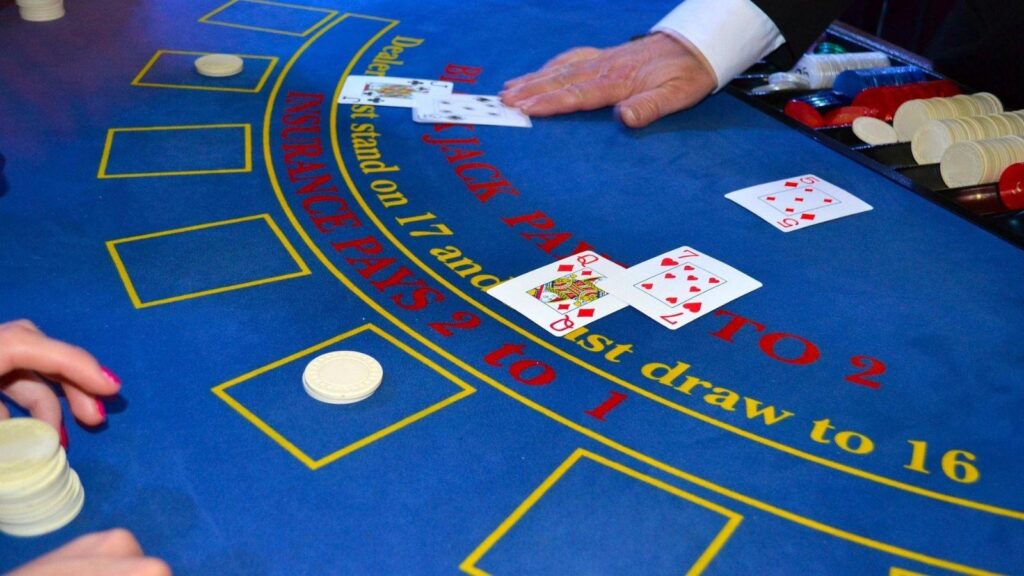
So who actually invented blackjack? Here’s the honest answer: nobody really knows. And that’s part of what makes the story so fascinating. Unlike a board game with a patent and a creator’s name on the box, blackjack sort of pieced itself together over centuries. Different countries, different rules, different names. The game we sit down to play today is the result of a long, winding road through European card rooms, American gambling halls, and a whole lot of rule-tweaking along the way.
It Started Long Before Anyone Called It Blackjack
The earliest roots trace back to Spain, of all places. A game called Trente-un, meaning “Thirty-One”, was mentioned by a priest as far back as 1440. The concept was familiar: draw cards, try to hit a target number, don’t go over. Simple enough, right?
Then there’s Miguel de Cervantes. Yes, the guy who wrote Don Quixote. Around 1601, Cervantes penned a short story featuring two card cheats playing a game called veintiuna. The goal? Reach 21 without busting. Sound familiar? The story even mentions that aces could count as one or eleven. That’s basically the skeleton of modern blackjack, written over 400 years ago.
Meanwhile, the French had their own version brewing. Vingt-et-Un, literally “Twenty-One”, popped up in French casinos around the 1700s. It likely borrowed from older French card games like Chemin de Fer and Ferme. And it wasn’t just a commoner’s pastime. Napoleon Bonaparte reportedly loved a good hand of Vingt-et-Un to unwind after battles. Even King Louis XV’s court got hooked on the game.
Crossing the Atlantic Changed Everything
French colonists carried Vingt-et-Un to North America in the 18th century, and the game found a natural home. By 1820, legalized gambling halls in New Orleans were dealing hands of 21 regularly. But the rules looked a bit different back then. Only the dealer could double down, for instance. Players had fewer options and less control.
One colorful figure from this era was Eleanor Dumont. Born in France, she immigrated to the U.S. and eventually opened her own gambling hall in Nevada City, California during the mid-1800s. She named it Vingt-et-Un, and players traveled from across the country just to sit at her table. She was considered a rarity among card dealers, and her reputation became almost legendary.
The real shift happened when Nevada legalized gambling in 1931. Casinos needed to fill seats, and the game of 21 was a natural draw. To sweeten the deal, some casinos introduced a special bonus payout: if you were dealt a black jack (the Jack of Spades or Clubs) alongside an Ace of Spades, you’d get paid 10-to-1. That payout didn’t last long. But the name blackjack stuck, and it’s been called that ever since.
The Math Nerds Who Changed the Game
For most of its history, blackjack was treated as pure luck. You got your cards, you made your best guess, you hoped for the best. That all changed in the 1950s when four mathematicians decided to get serious about it.
Roger Baldwin, Wilbert Cantey, Herbert Maisel, and James McDermott, known as the “Four Horsemen of Blackjack”, published a paper in 1957 laying out a mathematically sound basic strategy. They figured out the optimal play for every possible hand. It was a game-changer, though it didn’t get the attention it deserved at the time.
Then came Edward O. Thorp. His 1962 book Beat the Dealer blew the doors wide open. Thorp was a mathematics professor who developed card counting techniques that could actually give the player an edge over the house. Casinos were not thrilled, to put it mildly. They scrambled to add more decks, change shuffling procedures, and train dealers to spot counters. That cat-and-mouse dynamic between casinos and skilled players? It’s been going strong for over 60 years now.
Where Blackjack Lives Today
What’s remarkable is how adaptable this game has been. Whether you’re playing at a physical table or trying your luck at a social casino from your mobile device, the core thrill is the same. Can you get closer to 21 than the dealer without going bust?
The rules have been polished, the strategies refined, and the options expanded. But that basic tension, that split-second decision of whether to hit or stand, hasn’t changed much since Cervantes wrote about two clever cheats in Spain four centuries ago.
Nobody invented blackjack. It invented itself, one tweak at a time, across borders and generations. And honestly, that feels fitting for a game that’s always been about playing the hand you’re dealt.
A Game That Keeps Dealing
Blackjack has survived centuries of change, crossed oceans, outlasted empires, and adapted to every new era of gaming. From handwritten Spanish stories to neon-lit Vegas floors to the screen in your pocket, it just keeps showing up. No single inventor, no founding moment, no grand origin story. Just a simple question that’s kept people coming back since the 1400s: do you hit, or do you stand? Four hundred years later, that question still hasn’t gotten old. And if history is any guide, it won’t anytime soon.
Leave a Reply